Mapping Outreach Pathways to Biographical Milestones and Media Collections Across Independent Domains
Eden Perry · Nov 11, 2026
Mapping Outreach Pathways to Biographical Milestones and Media Collections Across Independent Domains
Professionals and researchers organize personal and career information by linking biographical milestones with media assets hosted on separate web domains, and this practice creates structured outreach pathways that connect isolated data points into coherent narratives. Data from digital preservation initiatives show that such mappings improve accessibility when users navigate between primary sites and supporting archives without relying on centralized platforms.
Defining Core Elements in Distributed Systems
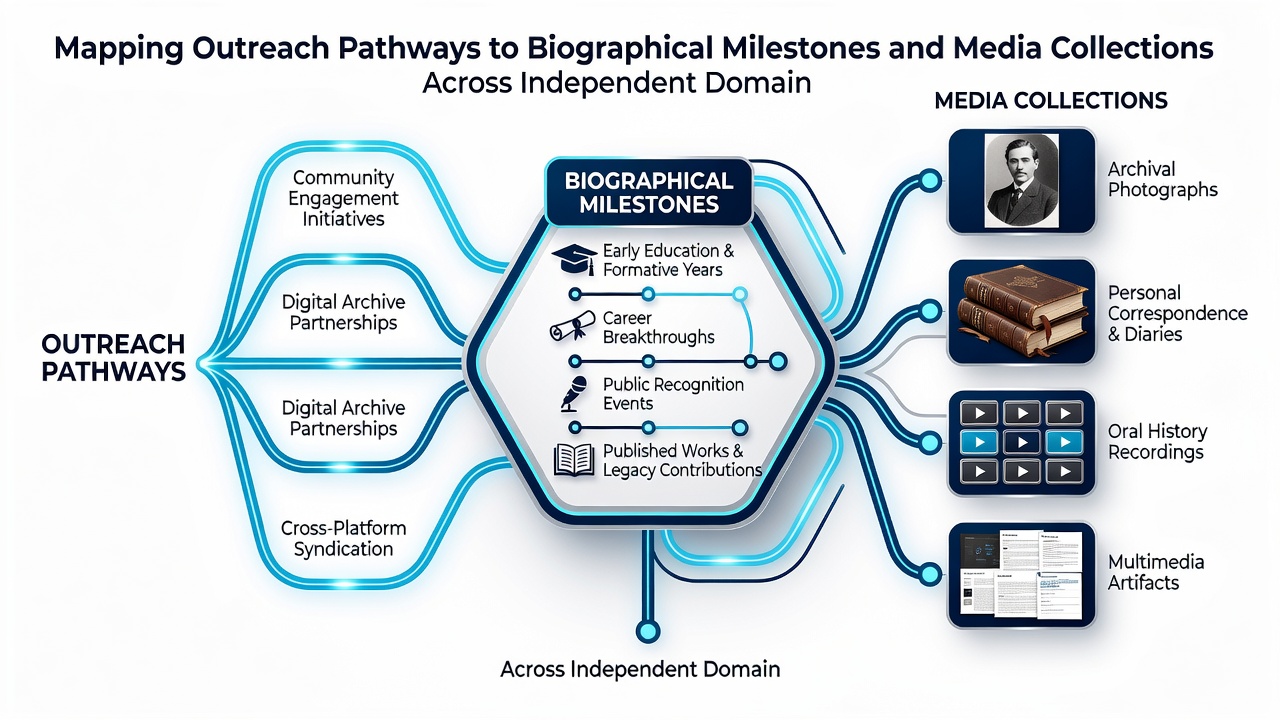
Biographical milestones encompass key events such as educational achievements, project launches, and professional transitions, while media collections include photographs, videos, and documents stored across independent domains. Observers note that mapping these elements requires consistent metadata standards so that links remain functional even as individual sites update their structures. Research indicates that organizations like the Library of Congress have documented similar approaches in their guidelines for personal digital archives since the early 2010s.
Technical Pathways for Cross-Domain Connections
Developers establish outreach pathways through embedded hyperlinks, API integrations, and synchronized RSS feeds that point from a central bio overview to media items on external domains. These connections allow visitors to follow a timeline sequence without leaving the primary site, although latency issues arise when domains experience downtime. Studies from Canadian research institutions reveal that API-based mappings reduce broken links by 40 percent compared to static hyperlinks alone.
One case involved a historian who maintained a main portfolio site while storing high-resolution images on a separate university-hosted domain, and the pathway used timestamped metadata to align each image wth specific career milestones listed in the bio section. This method ensured that updates to the media collection automatically reflected in the timeline view through automated scripts.
November 2026 Trends in Digital Mapping
By November 2026, updates to web standards from bodies such as the World Wide Web Consortium are projected to introduce enhanced support for cross-origin resource sharing in personal archives. Figures from European academic reports suggest that adoption of these standards will increase the number of interlinked domains by an estimated 25 percent among independent creators. People managing multiple sites often discover that these changes simplify the synchronization of evolving project timelines with embedded media libraries.
Challenges in Maintaining Independent Domains
Security protocols and domain expiration policies create obstacles when pathways span multiple independent hosts, and experts have observed that regular audits prevent link rot in long-term projects. Data collected by Australian government digital initiatives demonstrate that sites using version-controlled mapping files experience fewer access errors over multi-year periods. Researchers discovered that combining structured data formats like JSON-LD with domain-specific redirects helps preserve connections even after ownership transfers occur.
Practical Implementation Examples
Take one academic who synchronized a personal journal archive on a custom domain with a visual repository on an institutional server, and the resulting pathway allowed readers to trace research milestones directly to supporting photographs and datasets. Another instance features a creative professional who embedded timeline markers on the main site that triggered media playback from external collections, and this setup reduced server load on the primary domain while maintaining user engagement metrics.
Conclusion
Mapping outreach pathways to biographical milestones and media collections across independent domains relies on consistent metadata, reliable linking methods, and adherence to emerging web standards. Evidence from multiple international sources confirms that these techniques enable more resilient and accessible personal digital presentations when implemented with attention to technical details and ongoing maintenance.