Synchronizing Evolving Project Timelines With Embedded Media Archives Across Standalone Domains
Eden Perry · Sep 30, 2026
Synchronizing Evolving Project Timelines With Embedded Media Archives Across Standalone Domains
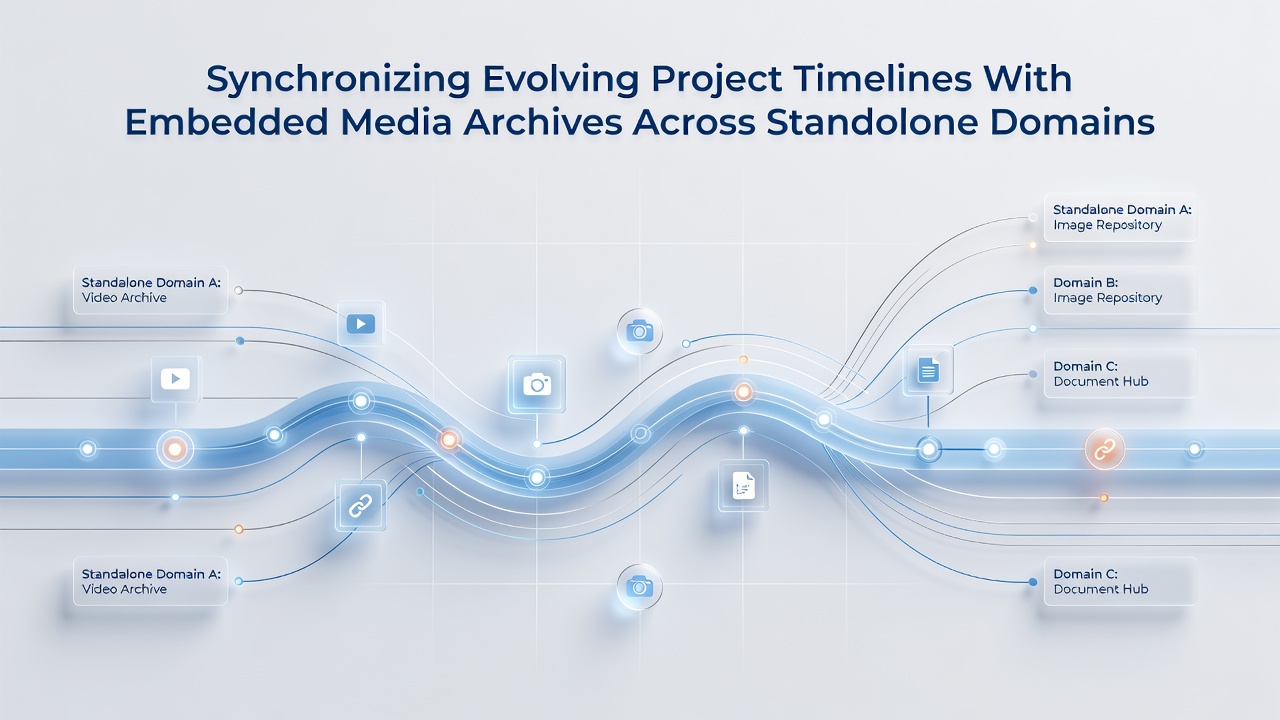
Project managers and digital archivists face ongoing demands when timelines shift while media files remain stored on independent domains, and synchronization requires careful coordination of metadata tags, API endpoints, and timestamp protocols to maintain consistency without centralizing all assets in one location.
Core Components of Timeline and Archive Integration
Standalone domains often host project updates separately from visual or document archives, which creates the need for mapping mechanisms that link schedule changes directly to embedded media references; researchers at institutions like the Australian National University have documented how relational identifiers allow updates on one server to propagate references across others while preserving original file locations.
Data structures play a central role here because each timeline entry carries fields for start dates, revision points, and linked media IDs, whereas archives store corresponding entries with embed codes that reference those same IDs through cross-domain queries.
Technical Approaches Used in Practice
One common method involves scheduled API calls that poll for timeline modifications and then refresh associated media embeds on receiving domains, and this process relies on secure token exchanges to avoid unauthorized access during transfers. Web standards bodies such as the World Wide Web Consortium outline protocols that support these exchanges through structured data formats like JSON-LD, which embed timeline context within media metadata without requiring full file duplication.
Another technique uses event-driven triggers where a change in a project milestone automatically generates a notification that updates archive pointers, yet this demands robust error handling to manage network latency between domains that operate under different hosting environments.
Implementation Patterns Observed Across Organizations
Teams at research facilities and creative agencies have adopted layered identifier systems that tag both timeline events and media assets with persistent URIs, allowing synchronization scripts to match records even after domain migrations occur. In one documented workflow, a European cultural heritage project aligned quarterly timeline adjustments with an archive hosted on a separate institutional server by routing all updates through a shared metadata registry that logged every modification with UTC timestamps.
Those who manage multiple client projects often discover that embedding lightweight reference objects rather than full media copies reduces bandwidth demands while still enabling real-time display updates when schedules evolve. Figures from industry reports indicate that organizations employing these reference-based methods report fewer broken embed instances compared to direct file linking approaches.
Handling Changes and Version Control
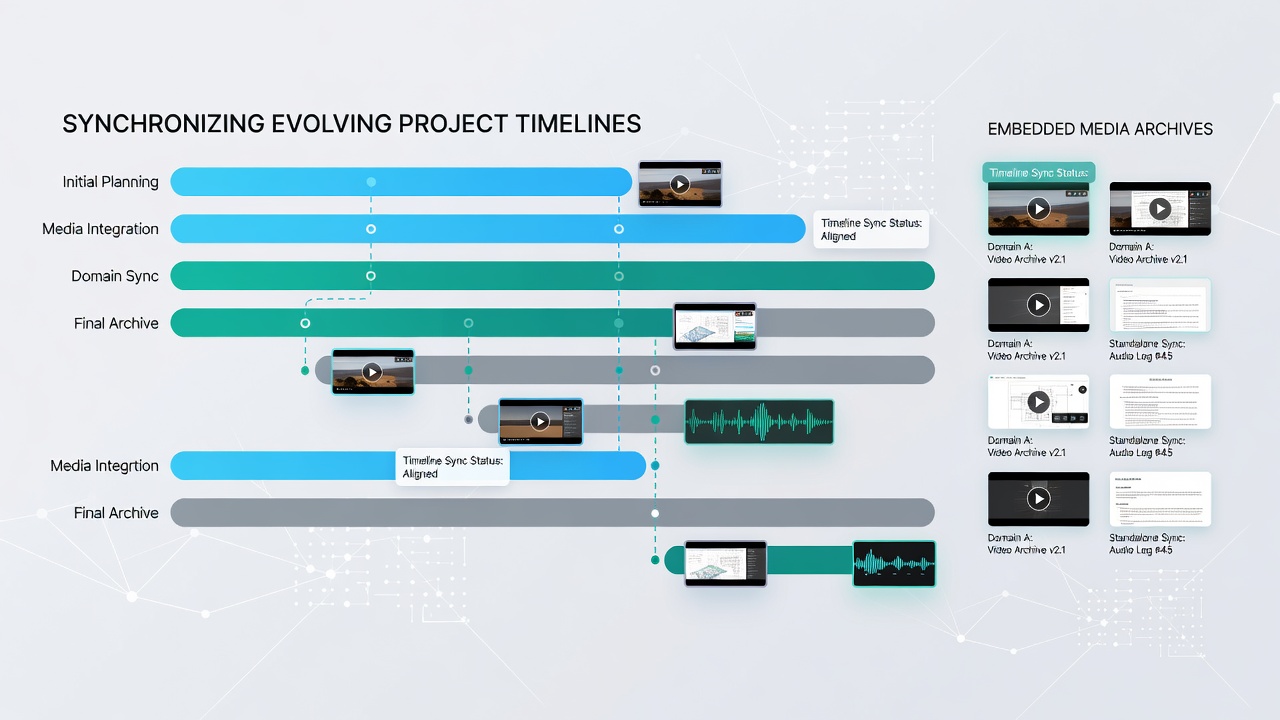
Evolving timelines introduce version branches that must align with corresponding media states, and version control systems adapted for distributed environments track these branches by storing delta files that describe only the differences between schedule iterations. Observers note that September 2026 brought wider adoption of enhanced delta compression standards among open-source tools, which improved efficiency for domains handling large visual collections tied to active projects.
Conflict resolution becomes necessary when simultaneous edits occur on separate domains, and automated merging algorithms compare timestamp sequences plus user-assigned priorities to determine the authoritative state before pushing synchronized updates outward.
Security and Access Considerations
Cross-domain synchronization requires authentication layers that verify permissions without exposing full archive contents, and token-based systems combined with domain whitelisting help restrict which timeline services can trigger media refreshes. Government digital preservation guidelines from Canadian sources emphasize the importance of audit logs that record every synchronization event with details on originating domain, modified fields, and resulting archive state.
Conclusion
Effective synchronization of evolving project timelines with embedded media archives across standalone domains depends on consistent use of identifiers, secure API practices, and version-aware data structures that adapt to distributed environments. Continued refinement of these methods supports reliable access to project information even as schedules and content collections grow independently on separate servers.